THE SAINT LEONARD PARISH CHURCH
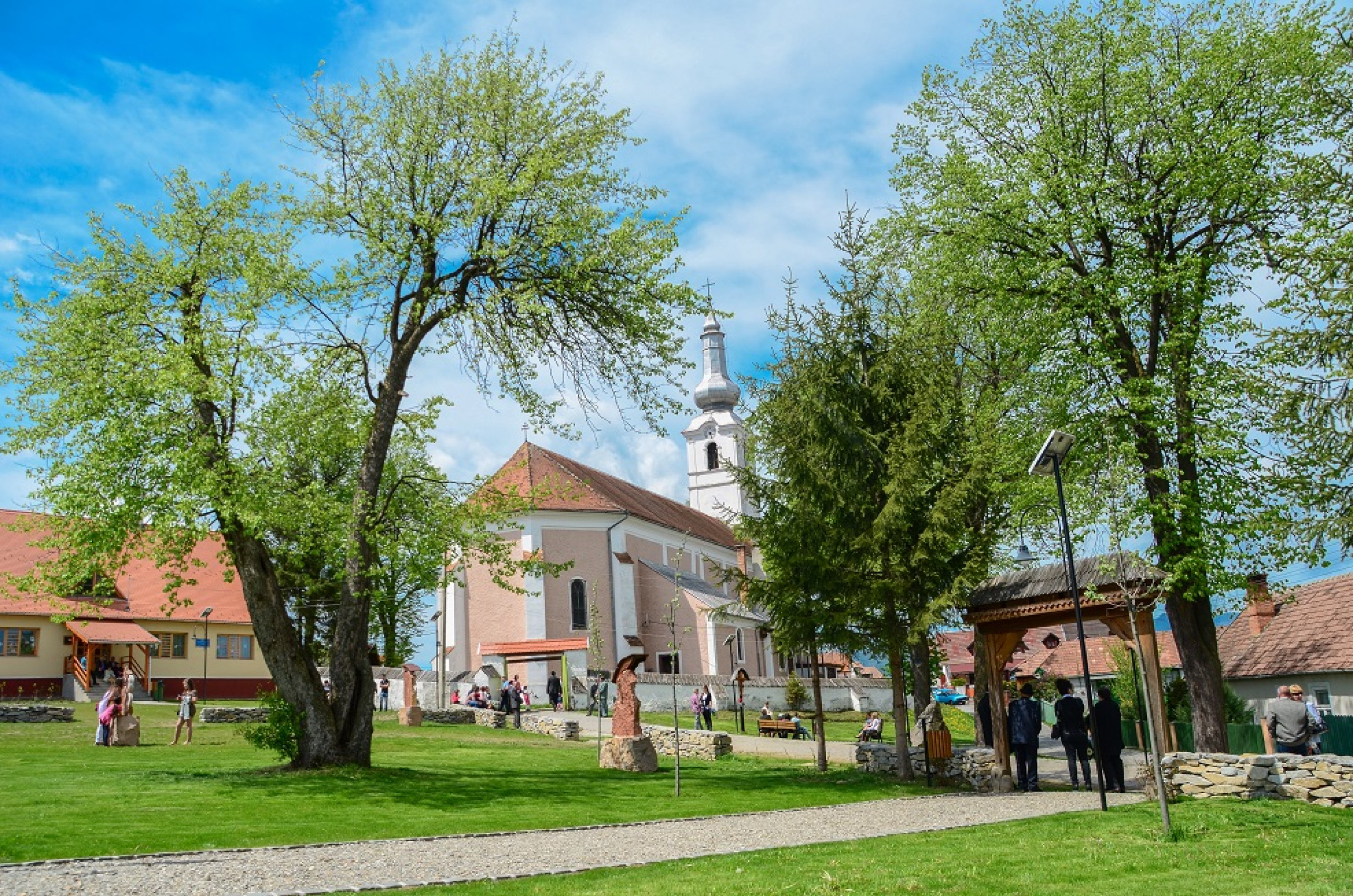
The Saint Leonard parish church was built in 1771. In 1899, with financial support from the Mélik family, the sanctuary was enlarged by 6 metres, so the church’s present length is 41 m and its width 12 m. The tower rises to 47 m. The interior space — completed by 1787 during the pastorates of Dániel Hanzer and József Szabó — has a Baroque layout.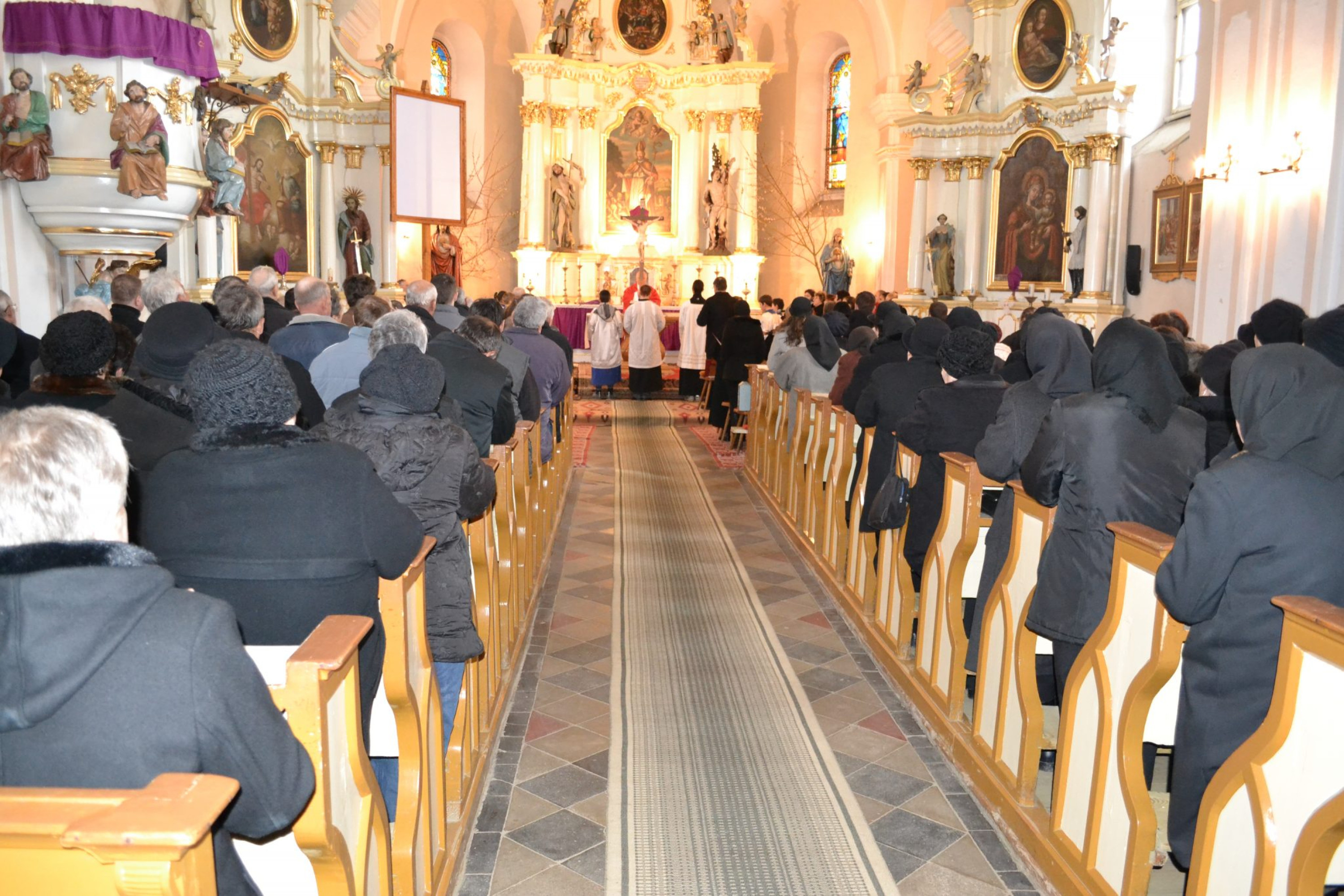
The painting on the main altar depicts Saint Leonard. The stained-glass windows were made in Budapest in 1908 as a gift from the Puskás family. The left side altar represents the Holy Trinity. The most valuable is the right side altar showing the Virgin Mary with the Child; its original (now in the Museum of Fine Arts in Budapest) may have been painted around 1780 by an unknown Armenian artist. The statues of Mary and Saint Joseph in the Holy Cross chapel of the transept date from about 1800 and show Tyrolean influence. The tabernacle is the only surviving remnant of the previous church that burned down. Three bells were produced in Temesvár (Timișoara) by Novotny and in Arad at the Hőnig workshop. In the niche above the transept there is a statue of Saint John of Nepomuk, carved by sculptor Emil Burján-Gál of Gyergyószentmiklós based on the 19th-century original at the parish. Also noteworthy is the corpus in the sacristy, made in a popular Renaissance style in the mid-18th century.
RUINS OF THE OLD CHURCH
The foundations of the previous (burned) church are still visible opposite the parish office. These were unearthed in 1933 by Endre Orosz and Lukács Zárug with the permission of the Transylvanian Museum Society. The excavation revealed the remains of a thick-walled stone church, reinforced with buttresses, measuring about 22 m in length and 8 m in width.
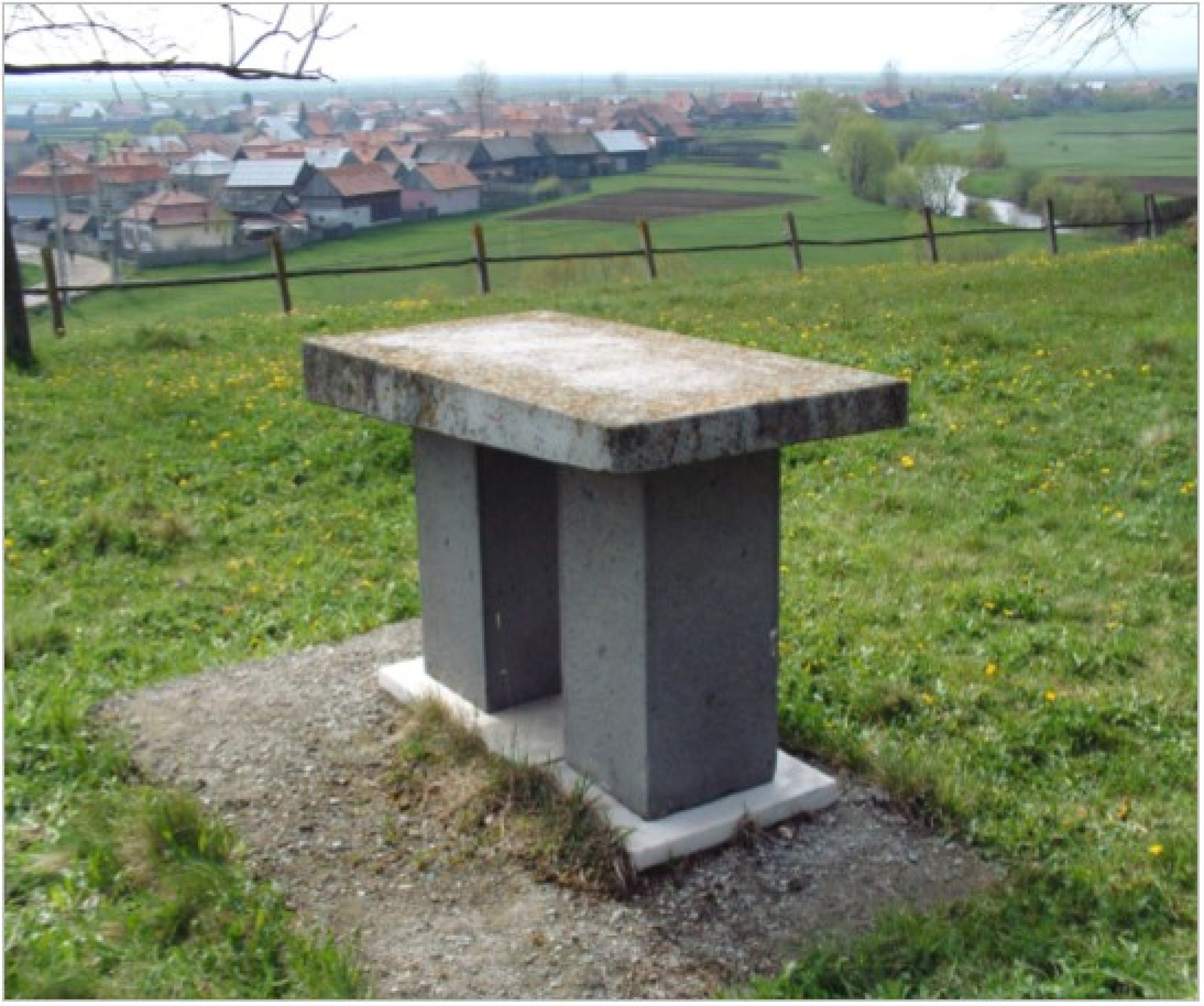
(The old church altar)
CEMETERY CRYPTS
On the left side of the main avenue of the cemetery near Saint Leonard parish stands the Mélik family crypt, built in neo-Gothic style at the end of the 19th century. Opposite it is the Puskás family crypt, constructed in 1912 by architect István Kladek of Subotica, who at the same time oversaw the building of the large church in Ditró. The oldest crypt in the cemetery is the small Zakariás crypt, erected around 1860 by Jakab Szekula.
THE CSUTAKFALVA ÁRPÁD-HOUSE SAINT MARGARET CHAPEL
About 2.5 km west of the commune centre is the Árpád-house Saint Margaret chapel, consecrated in 1942 during the tenure of parish priest Elek Pál. The building was enlarged in 1968. In the chapel there is a painting of Saint Margaret bearing the Hungarian coat of arms; the author is unknown. Its 65-kg bell was made in the Hőnig Frigyes workshop in Arad.
THE SAINT RITA CHAPEL
In the Alszeg quarter, at Fenekalja Street No. 55, the foundation stone of the Saint Rita chapel was laid in June 2011. The roughly 200-seat chapel was built based on designs by architect Zoltán Máthé from donations by the parish, the local council, the Romanian government and numerous private individuals.
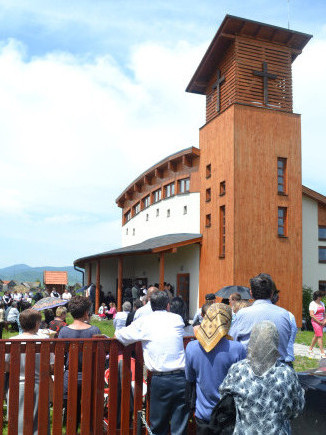
THE SAINT STEPHEN CHAPEL IN KICSIBÜKK